Wednesday, 16 July 2014

"You are who you choose to be" - The Iron Giant

Warner Bros is usually known (in terms of animation) for its various projects surrounding the Looney Toons and all the DC superheroes. However, it did venture unsuccessfully with other projects such as Osmosis Jones. Another film it made was The Iron Giant. Although it was successful critically, it failed at the box-office. This film was about a giant robot that crashed into Earth from somewhere else in the universe and how a boy befriends it and struggles to keep it a secret from the government. This film is an enjoyable watch, but more than that it is heart-warmingly inspirational with other messages included too. 
The Iron Giant is a very intriguing film just from the idea of the robot alone. But it turns out to have a lot of depth behind it. http://www.deviantart.com/art/The-Iron-Giant-121846187

First and most obviously the film presents anti-war and anti-gun messages. To start with the film is set during the Cold War and at a time when paranoia was at its pinnacle as the Russians had just launched a the first satellite into space, showing their capability to bomb America from a very long distance. In Hogarth's school there are video warns of how to "protect" oneself from this sort of attack. Not only that but Hogarth's dad died as fighter pilot, leaving his family struggling to survive. Thus when it emerges the Iron Giant is from space some are scared it was from the Russians to destroy America. However, the robot never wants to destroy anything other than guns themselves and wants to protect and save all that he can shown throughout the film. When he first encounters guns they are they cause of the death of an innocent woodland deer, whom the giant has a certain affinity for. Guns, Hogarth tells him, are bad. Thus whenever guns, even if just toys, are around the robot he goes into a selfdefense mode. He sees guns as an evil force and whenever he is accused of being a gun he vehemently denies it. At the same time as showing all this it does not show the army itself and its generals as the bad guys. They were willing to stop and listen to reason. The real bad guy is the one who would use war for nothing more than personal power, and under the guise of protection or justice. 

Although this film is very anti-gun and anti-war the army is not the antagonists, it is a private citizen, Mansley. http://www.deviantart.com/art/Play-Nice-Iron-Giant-307538794

However, the main message I got from the film was more about what you want to do with live and how you should pick your goals and follow them no matter what because this will make you happy. We can see this is played out by the robot's inner battle between being a gun vs something more. This problem is first posed to the Iron Giant when Hogarth brings him his comic books. Having fixed the railway (not entirely successfully), Hogarth claims the robot is like Superman, he is a good guy. However the robot sees a comic book underneath about an evil robot called 'Atomo the Metal Menace' who seemingly destroys all in his wake. Despite looking more like Atomo, Hogarth reassures the giant he is who he wants to be. When confronted with guns and the stag's death the giant realises he does not want to be a gun obviously because of what they create, or rather destroy. The iron giant will endeavour to be like superman and not like Atomo or like guns that only aim at destruction. However, due to the setting of the film, where the mass population is paranoid of Russian attack especially with weapons from space (because this is just after Sputnik's launch). This is precisely what Mansley thinks of the giant and this is what means that, when Mansley is able to produce evidence of the giant for the army's general, a large amount of men, tanks and even battleships are sent to destroy the giant.

The Iron Giant choose to be Superman, not Atomo the Metal Menace. http://fc09.deviantart.net/fs71/f/2013/060/6/b/the_iron_giant_by_harrybognot-d48u3d3.jpg
 
Throughout the film, the Iron Giant shows he is really gentle giant. The fact that he lived in the forest and his connection to nature showed how peaceful his spirit is to begin with. The way he can play with Hogarth and help Dean with his art further show he is not out to destroy humanity. However, the fears surrounding him become true when he is playing with Hogarth and Hogarth points a toy gun at him. The giant, acting in self defence and anger towards guns, produces a laser beam and fires at Hogarth. Dean thus kicks him out. Likewise when the army meets him and attacks him he eventually turns into this walking medley of laser guns destroying all in his path. However, before this we are reminded this is not the Iron Giant's inclination as first the giant saves a child from falling to his death, Dean realising his mistake and more importantly, when the army is shooting at him, especially as he is flying and the fighter jets shoot at him, the giant tries to control his anger/self-defence mechanism. Although this is unsuccessful Hogarth is able to calm him down, saying "you are what you choose to be". This leads to the giant's redemption and metamorphosis, not into Atomo again, but into Superman. He is now the protector, telling Hogarth not to follow rather than the other way around, and his change into Superman is emphasised with the S on his chest. During this the robot is happy, "I am Superman" he says to himself in complete joy, having fulfilled his dream. He is not the angry force of destruction he despises but utterly happy. This joy is continued even past his destruction as his pieces are rebuilding around his smiling head in Iceland.
 
Although the giant was thought by many, under the paranoia of the setting to be just a big gun, he had to fight off these urges otherwise this would happen. http://maxkennedy.deviantart.com/art/Iron-Giant-273590062

Overall this idea of being what you want to be is further emphasised by how childlike the giant is shown to be throughout the film. The giant does not know how to speak and has to be taught this, along with the difference of a rock and a tree. Admittedly is world could be much different but the way he repeats and asks questions of Hogarth was so childlike. The fact that he is lead and commanded by someone as young as Hogarth shows how immature the giant is. It really seems like he is Hogarth's younger brother who tags along with him. The giant continues to act childlike through the film, playing with Hogarth in numerous different ways. The iron giant thus represents all children and the film says how they have the potential to be and do whatever they want. We should not expect them to be something in particular like everyone in the film (bar a few) expected the giant to be a gun. We should encourage them just like Hogarth and Dean encouraged the giant to be what it wanted to be.


The Iron Giant chooses to be Superman and fulfills his dream with an act of heroism. http://geektyrant.com/news/2013/8/4/iron-giant-superman-reflection-art
 
In fact, this whole idea is actually played out by Dean, the scrapyard artist who turns his pieces of scrap metal into pieces of art, if you could call them that. Dean sometimes talked about his life as a struggling artist and said how people buy and steal his pieces of scrap metal for their value but when he turns it into art they won't touch it, implying how bad it is. However, he keeps pushing on with his dream despite probably being more financially sound if he just bought and sold pieces of scrap metal, rather than spending all his time making them into art. However, this is what Dean loves and during the ending of the film we learn that he is the one who made the statue of the Iron Giant and he continues to live his dream happily. Although never directly confronted on his lifestyle choices I think we can tell from Dean and his conversations with Hogarth he had this in the past or does it himself. He is in fact the one that tells Hogarth that "You are who you choose to be", which is then later applied to the robot in its internal conflict. In addition, after telling the robot to get lost, Dean is the first one (well after Hogarth) to see that the giant wants to be peaceful and was acting in self-defense. Dean then becomes the robot's biggest defender in talking to the army. Dean has lived this life of being what people expect and what is the easy route but choosing to live the way you want to live and he thus sees this conflict within the robot and tries to help it. 

Although Dean did not start of liking the Iron Giant all that much they grew closer over time. http://jbsdesigns.deviantart.com/art/Iron-Giant-142231022
 
The Iron Giant is a great watch for many reasons. It was one that had a happy ending but unlike most cliched kids' movies it was not overly expected to happen this way. The happiness I felt at the end wasn't forced like many other children's animated movies. But more importantly it portrayed messages about war and being who want to be that I felt were slightly inspiration and heartwarming. The Iron Giant has a cult following nowadays, not just for the character it shows but also for the values it represents. I would also like to add how this was based on a book but was changed dramatically to portray similar values in a different way, which the original author was delighted by with the results. 


Monday, 7 July 2014

When is a series not a series? When it's a movie! - Blade of the Phantom Master

Many many animes, including films, have been adapted from an original manga source. Usually these become series in the case of attack on Titan and death note to name just a couple. Obviously it is easier to make longer mangas into a series of anime episodes than it cut it down into a film. Two very famous films, Nausicaa of the Valley of the Wind and Akira, have done it superbly, by taking part of the whole story, or one arc, and explaining it fully with no loose ends dragging and presenting it as one complete story. Blade of the Phantom Master, a Korean-Japanese animated film based on a Korean manhwa series, did not adapt very well. It is the story of Munsu, an Amen Osa (one who controls a spirit army as a policeman of the king), and his life after the kingdom of Jushin falls after its king is killed, thus leaving Munsu with no one to serve. It showed some promising aspects but did not feel like a complete movie. Instead it felt like the beginning of a tv series, not a feature film.


A manhwa cover of Blade of the Phantom Master.

The characters, especially the protagonist, Munsu, felt multidimensional but at the same time undeveloped. Munsu experiences in the desert alone show various sides to him. He is kind to Monlyon and grateful for the water but at the same time he is willing to use the body of the guy he looked to be about to save to block numerous spears. Likewise he shows compassion for the citizens of the city Lord Byun controls, but at the same time anger at their trust in others and lack of initiative. In the same way he shows care for the boy Jyun but then is quick to give him a lesson in tough love. He is someone who seemingly has a strong sense of justice but at the same time he is often overly vicious in his manner of retribution. I would love to see this internal struggle continue and perhaps come to a head when he meets his nemesis. Thun Hyan is also very interesting. She is quite a determined strong-willed individual, who at one time tried to commit suicide by biting her own tongue out due to the restraints she was under. Her fighting prowess is amazing to boot. At the same time she is quite weak too, seemingly needing to hang onto others and lacking in independence after she is rescued. She almost willingly becomes Munsu's slave. She doesn't speak in the first half of the narrative but finally finds her voice towards the end. This too would be interesting to build more upon. 


A nice piece of fanart of the two main characters: http://www.zerochan.net/483425#full

In fact, the relationship between the two main characters also showed some development. At first Munsu feels sympathy and pity for Tyun Hyan and her situation, but when she wants to accompany him it turns into displeasure and him ignoring her as they trek through mountains and over streams, etc. When he finally does accept her it is more as a slave than a bodyguard. Then when she fails to follow his orders, stepping in to save him from Juite's minion, she is scolded and told to leave as he had not told her to do so. She finds her voice, and promises to follow his orders, which she does, until he is almost killed by Juite himself and she saves him. This time it is gratitude not a scolding she is met with and their relationship is allowed to grow. Most interesting of all was how Munsu straight out said he was not her dead lover, and would not replace him. However, this dynamic was not explored and this relationship generally, like the main characters themselves, was underdeveloped in terms of its potential. Although there was conflict between them at one point there could have been more. Basically I would have liked to have seem them get closer and then have a fight and reconcile again, or something along those lines, maybe even have a romantic part that tested Munsu's resolve as an Amen Osa (as he is thus not allowed to have a lover) and Tyun Hyan's dedication to her dead lover, Monlyon.

This piece of fanart shows where I would have liked the relationship to have gone: http://www.zerochan.net/full/483427

Despite all this the biggest downfall of the film was the big plot hole left open. This is that we learn of Munsu's nemesis, his ultimate enemy named Ajite, only after he has defeated Juite, the main antagonist of the film. It is most irritating to learn of who could be the main antagonist only in the final minutes of the film. In fact it somewhat devalues the film as a whole knowing what we watch did not bring any closure to the protagonist, only to the supporting cast first Monlyon and then Jyun, both of whom are dead already in fact. Furthermore, after the credits role we get another glimpse of Munsu and his Sando wandering around, imparting justice and presumably looking for Ajite. I suppose this would all be fine if this film was planned to have a sequel, but it wasn't. It was made to be a standalone and annoyingly so. If this film was to be a standalone film from a manhwa series it should have followed the precedent set by Nausicaa of the Valley of the Wind or Akira. These were both made from manga series, but both took a single ark and treated fully as if it were a single story without naming main enemies in the last ten minutes.


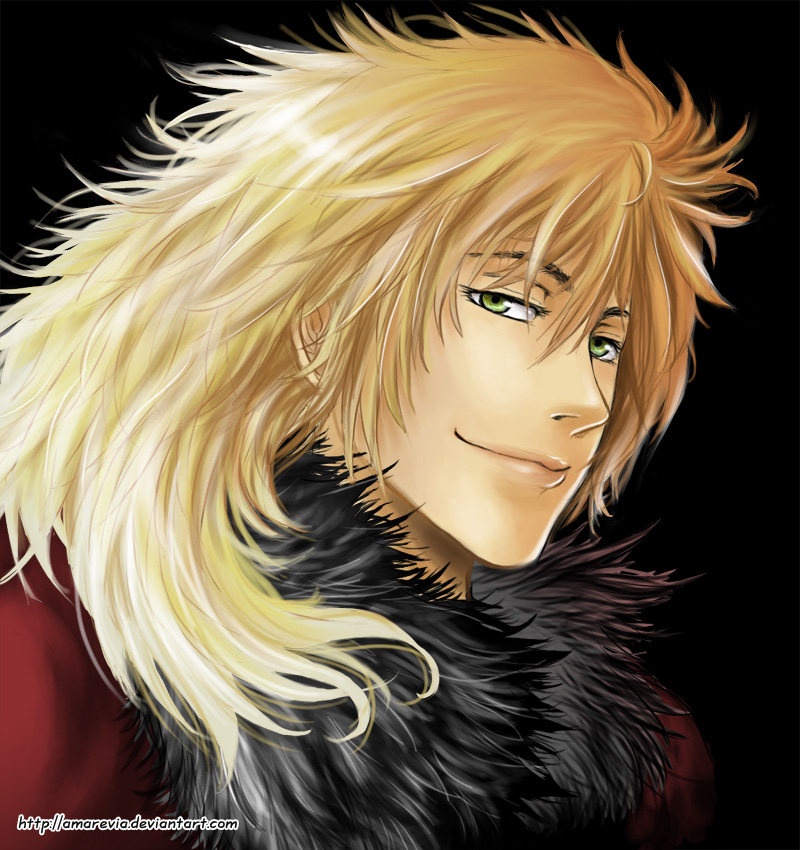
Fanart of the mysterious Ajite, who is the nemesis mentioned but I suppose he appears in the manhwa: http://fc00.deviantart.net/fs70/f/2010/065/6/d/SAO___Aji_Tae_by_Amarevia.jpg

So due to all this I felt as though the film in terms of its writing and adaption was incomplete and should have been made into a series and not a film. I mean the opening song comes thirty minutes into the film where there is a break in the action and seemingly between what could have been the opening episode and the second one. Quite literally nothing is said, and although it sets up the relationship between the Amen Osa and his Sando (bodyguard), with her following him around and not being acknowledged, it really did feel like a break between episodes. I feel like this movie could have been made into a Trigun-esque series where, like Vash, Munsu goes from town to town helping it until he eventually has to find his nemesis, Ajite, and defeat him. 


Man, I really feel like this, as a series, could have been as good as Trigun. http://bellbomb0.tripod.com/shin/shn_wll6.jpg

Before i end this post I would also like to bring up how each part of the movie, through Munsu's speeches, brought up a different issue and message. The first part of the film somewhat touched on politics or more how to make your life better. Munsu said how the people of the town that had been overthrown were useless because they just waited for help namely from Monlyon, who was of course killed in the desert. Munsu called them worthless and threaten to slaughter them too because they did not take matters into their own hands. Both Munsu and Monlyon talk about "miracles" and how they are nonexistent. He then praises the townsfolk for killing the feudal lord themselves after he had destroyed the army and was fighting Tyun Hyan. Likewise we feel sympathy for Tyun Hyan because she tries to all she can but is physically restrained from doing so, to the point where she tries to commit suicide by biting out her own tongue. Although this will not fix the issue, she does not submit to the situation. This is a nice play on the Korean folk tale of Tyun Hyan where she promises to marry Monlyon, not become his Sando, and (when he leaves) she waits for him eventhough she terrorised for doing so by other suitors. In other words, what would be the first episode tells never to give in to circumstances, no matter how bleak and if we want to change things we need to take action ourselves, not wait for things to happen for us. 


The "second episode" seeming touched on the issues of drug abuse to escape from reality. It pitted the importance of the truth we find in reality against the happiness we find in hallucinations and believing what we want to. This is played on with the demon guy Juite who, posing as a doctor, makes all the people on an isolated island happy through giving them mandrake extract. It turns out all the island actually died in a horrible plague and were not saved by the "miracle worker" doctor. This reality must be faced by Jyun who must shoot his already dead sister, which he does after a flashback, and then he eventually realises he too is dead and thus disappears, at peace. The battle between Munsu and Juite is the personification of the battle between reality and hallucination. Of course Munsu wins and after Jyun is laid to rest, within whom this battle also raged, Munsu asks him (rhetorically) what is the best thing in life. Munsu answers it himself, it is not pure happiness, but instead being able to look up into sky (facing reality) and be proud of yourself. There is an implication of happiness in it but the main focus is on being able to be face reality or the truth of life and not hiding for it behind happiness. The film, or rather the series (could have), had some interesting ideas and again I would have liked to have seem more.


Wicked drawing of the Amen Osa and his Sando: http://raykit.deviantart.com/art/Shin-Angyo-Onshi-43975670

Overall, this film left me with mixed thoughts. On one hand it presented good messages, showed glimpses of interesting characters and relationships between these characters, as well as creating a fairly interesting (post-apocalyptic come fantasy) world. On the other it felt very incomplete, in terms of plot and characterisation. What I came away with was more on the feeling that there should have been more, this should have been made a series, not a film. Really I would have wanted Blade of the Phantom Master to have been a series and I think it could be remembered as fondly as say Trigun, which shares a similar post-apocalyptic setting, deep characters and rather philosophical messages sprinkled throughout the series. 
Movie poster (Korean).
Links:


http://anidb.net/perl-bin/animedb.pl?show=anime&aid=2190

http://myanimelist.net/anime/884/Shin_Angyo_Onshi 

http://www.animenewsnetwork.com/encyclopedia/anime.php?id=5182

Monday, 30 June 2014

Could the end of the world just be a set-up? - Legend of Korra Season 2

So the first episodes of the third season of Avatar: Legend of Korra have just come out and it is showing promise so-far. In fact more than anything I am super pumped for this series more because of the trailer than anything. A lot of things were glimpses at: a number of air-nomads (with noticably darker skin than Tenzin and his children); a very rich Earth kingdom lady (who one can only assume is the Queen of the Earth kingdom) and her army I guess; an elderly King Zuko; Eska and Desna; as well as the daughter(?) of Combustion Man (I like Sparky-Sparky-Boom Man better); and numerous previously unseen locations (a desert, other cities, new islands). All I can assume is that Korra is venturing outside Republic City, and to be honest this excites me to no end. The greatest thing about The Legend of Aang series was the wierd and whacky world in which he explored in order to find teachers and learn the elements. Now that Korra is exploring it I am excited to see how it has changed. Also with all these seemingly influencial (in the world) characters in the trailer does it signal the start of a new war? But one question remains for me about Book 2, does this leave the second series as just a set up series?


Book One of Korra was set up as a sort of stand-alone 12 episode mini-series that then got picked up for a further 3 seasons to bring the episode count up to 52 in total. I could be thus assumed that Book Two would set up the other two Books that would conclude the story of Korra, just like how Aang had his three books. Book Two however had its own antagonist who was beaten and the world was returned to a state of balance so should this Book been seen as a standalone series too? In short, no. I would argue that Book Two was brilliantly played out but in the end was just a set up series for the main story of Korra's avatarship to unfold. 

The meme a co-creator of Korra (Bryan Konietzko) made to announce more books as a series beyond season 1: http://bryankonietzko.tumblr.com/post/27078349740/im-sure-this-meme-is-dead-by-now-but-it-still

Many would argue though that Unalaq was an enemy worthy of his own series and this Book was more than just set up for something else. With Unalaq and his attempt to become the "Dark Avatar" is where the writers got it right in being able to show this as something more than just a prologue. Everything about Unalaq and Vaatu was cosmic: Korra had to reconnect with the first Avatar to just learn about Unalaq's plan; Unalaq vs Korra was going to invlove, quite literally, the spirits of good and evil, or rather "light and dark"; and of course Unalaq's plan could only happen during the Harmonic Converge (where the planets align), which only happens every 10,000 years. How could an enemy that could only be created with a ceremony so cosmic be just a mere introduction to the main story? This is what the writers did right with it. They were able to create an antagonist that would seem like a main villain, due to the epic scale of his powers, but is just a tool for set-up. 


The next two Books in the Korra series (Book Three: Change and Book Four) surround the events that happen in consquence of Korra leaving the spirit portal open. Obviously the writers wanted to do something big and drastic to the world, namely letting the spirits into the world (and having watched the first three episodes give many new people, including the new antagonist airbending powers). How could they do this? Well obviously Harmonic Convergence was conceived of as a way for Korra to open the portals and change the world in a good way for new ideas and new storylines to develop. So the writers had to answer why were the portals opened. They could not do it out of Korra's storyline, so they had to make her do it. Thus they had to make a reason for Korra to open the portals and keep them open. Thus Unalaq was conceived of as someone who could trick Korra into opening the portals and as the person who presented the arguments for keeping the portals open (saying how the humans had lost touch with the spirits). Other factors (such as seeing Bumi's friendship with the dragonfly bunny spirit) also convinced her to keep it open, but Unalaq was the driving force. In other words Unalaq was an enemy not for a great story but just to get Korra to open the portals and leave them that way so that storylines could be created for the next two books. 


I would further argue this because Unalaq and Vaatu as enemies were very cliched. I mean he was set up very early and rather obviously as the one who would be the main antagonist. The writers tried to do what they did with Amon in making his cause seem worthy (this time arguing for spirituality instead or arrogance towards the spirits or spirituality vs secularism) but then his cause becomes just about power. Amon's cause was one many could get behind and this made the first series great as I said before: http://animevigil.blogspot.kr/2013/09/amon-equalist-legend-of-korra-season-1.html.  However, Unalaq, as it eventually turns out, just wants power. He was willing to sacrefice his son in order to open the second portal and as his children admit at the end "he had beomce a deplorable man". He fuses with the manifestation of evil, the spirit of darkness Vaatu. In doing this he becomes the "Dark Avatar". I am sorry but you don't get more comic-book cliched than that. Basically because Unalaq and Vaatu, by the end of series, had become so cliched that the story was nowhere as compelling as the first Book I would say this Book was made to introduce the next two, hopefully more morally ambiguous and thus interesting, seasons. 

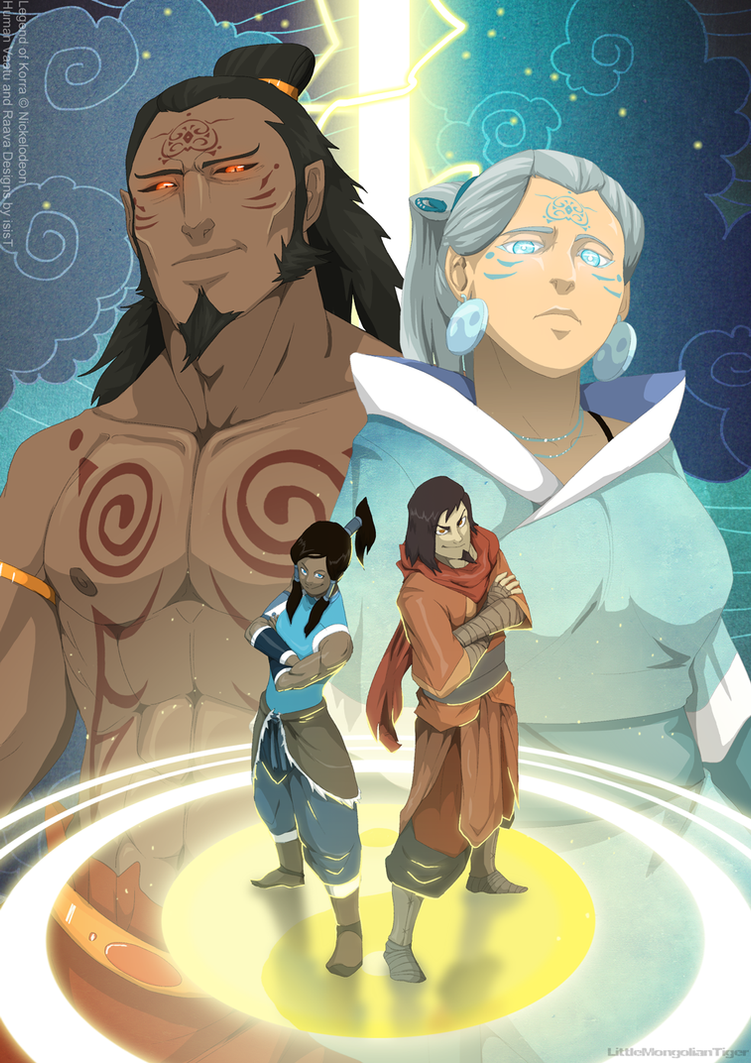
Fanart of Korra with the spirit of Raava: http://i1.ytimg.com/vi/mBmUCe6Q2Zk/maxresdefault.jpg

Furthermore, Unalaq was not really set up as an enemy with a backstory. For Amon we had the backstory explained to us by Tarrlok who told us about Amon's childhood, connection to bloodbending and the reasons behind his move to take other's bending away. For Unalaq, yes, we are told of how he got his brother banished (by the corrupted judge) and for Vaatu we are told of his goals and ambitions through Wan's story, but it still leaves me with unanswered questions. We are told of how Amon got his bloodbending ability, but how did Unalaq get his connection with the spirits and where did he learn how to control them? I suppose we can assume by studying very hard or just naturally etc. But the main question for me is: how did Unalaq find out about Vaatu, Harmonic Convergence and when did he decide he wanted to fuse with Vaatu? I mean sure Tenzin knew about the "Tree of Time" but if he had any idea of Hamonic Convergence surely he would not have left Korra so quickly for his family vacation. I suppose again we could say his studies told him about Vaatu and Raava, but again why does no one else know. I think Korra was right at hinting Unalaq was jealous of his brother when said "it must have killed you to find out your brother was the father of the Avatar". This could be a motivation for fusing with Vaatu, because of his jealousy for his niece. Did Unalaq go into the spirit world before? Wan Shi Tong knew him, maybe he studied in the library and found out everything, then when he found out his brother's daughter was the Avatar he decided to become the "Dark Avatar" as he already knew about the nature of the Avatar, Raava and Vaatu from his studies with Wan Shi Tong. This is all speculation and because I can only guess at this backstory, it makes me think Unalaq was not properly thought out as say Amon was and is just a means to creating a new set of storylines in a new world of the Avatar. 

Fanart of Korra doing her spirit thing: http://artipelago.deviantart.com/art/Korra-Spirit-407380348 This artist has many more works on the Legend of Korra, check it out.

I mean the only way Korra found out about everything to do with he nature of the Avatar, Raava and Vaatu was through her connection to Wan, something Unalaq did not have. In fact the story of Wan is crucial to this argument. Although it says how Wan became the Avatar and why Unalaq must be stopped it does so in a rather long narrative way. It goes into who Wan was before the Avatar (in order to show Korra she has her on spirit and is not defined by Raava) and it tells the story of Raava vs Vaatu  (to show why Unalaq must be stopped due to the nature of Vaatu). However, the story as tells about Harmonic Convergence (yes necessary for Vaatu and Unalaq's plans) but just as necessary for setting up the next seasons as consquences of a new world brought about by Korra opening the portals. In addition the story of Wan also showed how spirits and humans interacted and what they thought of each other. How spirits thought humans were destruction and selfcentred and how humans thought spirited were to be feared because of their mystical powers. It even showed a few scenes of spirits and humans fighting to bad results (a plot point for the next two seasons??). The reason Wan became the Avatar was because he was different to all other humans. The story also shows why exactly he closed the portals, which of course sets up how when Korra leaves the portals open she will change the world. Thus, the two epsiode story of Wan, as artistically appealing and interesting in terms of the overall world as it was, can be seen as a story about the Harmonic Convergence and the relationship of humans and spirits, just as much as it is about Vaatu, Raava and the Avatar. The story of Wan sets up how the world will change at the end, which is necessary for this to be a set up season, just as much as it was for driving the antagonist characterisations forward. It is interesting to note how different Wan's drawn out fusion with Raava was compared to Unalaq's comparatively simple fusion with Vaatu, as it shows there is a little bit of inconsistency given to this aspect of the tale. 


Lastly, why was the Harmonic Convergence needed? Having watched the first three episodes it shows that it has given Korra something to fix in Republic City, which when she cannot she is driven out by the president. Second it gives the main antagonist, although with others, a power he could not possibly have before Harmonic Convergence. The antagonist of the new series, the leader of a group of four escaping capatives (held by the White Lotus in secret prisons restricting their bending) was given the power to bend air. The reason behind it is Harmonic Convergence presumably releasing energy to balance the four nations but nothing has really yet been revealed. This also gives Korra a new task, outside of Republic City, to find the new airbenders, and restore the Air-Nomad culture at the various temples. This to me is much more interesting than the take down the purely evil guy that was in the second season. Two weeks on from the Harmonic Convergence and the reasons for having it as a set up to these new problems looks interesting. 

Fanart of Korra vs a dark spirit: http://solkorra.deviantart.com/art/Korra-vs-Evil-Spirit-South-Pole-Batlle-378632449 This artist also has more Korra artwork. 

As an end note the second season left two interesting plot pieces open, which the first season did not. First Varrick was able to escape prison with Zhu Li (after "doing the thing") and was not seen from again. Could he return? Also, like Amon, Unalaq dies in the end. Although Amon had no family and no place of power outside his rebel group, Unalaq was chief of the Northern Water. Yes, the South was given a Chief in Korra's father, Tarrlok, the North has been left without one. In the trailer fo the third season we saw Desna and Eska waterbending, along with a host of others using their powers, such as  someone who appeared to be a highstanding citizen of the Earth Kingdom and a firebending King Zuko (recognisable by his scar). Will their be a war? Who will start it? As we hav seen from The Legend of Korra, the Fire Nation, is not the only nation capable of invasion. Having watched the first three episodes of the new season it definitely hints that the Earth Queen is one to watch, in terms of both riches (like Varrick) and invasion, although it seems more likely she will invade Republic City to regain former Earth Kingdom territory (and maybe more).   

Season 3 Big story is Korra must rebuild the Air nomads and their temples: http://www.awn.com/sites/default/files/styles/original/public/image/attached/1016847-korra_1.jpg?itok=GcjkhfuU

In conclusion, yes the series was great, in some areas. It shows a great relationship between Tenzin and his siblings Kya and Bumi. Likewise the relationship between Mako, Asami, Korra and Bolin, especially the love triangle it created, was interesting. However, as the season went on it started to pale in comparison to its predecessor and now that season 3 has started it really just feels like a set-up story rather than something that was as clean and well rounded as season 1. First, the enemies came off feeling too cliched after Amon, who is for me one of the best antagonists I have ever seen on the screen, big or small. Second, the plot, in terms of Unalaq backstory and motivations were too unclear and not really specificed other than "he just wants power". Third, Third, the story of Wan (the first avatar) was not just set up for Raava vs Vaatu, it was set up for the Harmonic Convergence and the relationship of spirits and humans, with which the writers could preface the next two series. So due to this I felt that the second season of Korra was well done but due to failings in areas is just a set up for stories that I hope are more interesting and less cliched and obvious as light vs dark, especially as the leader of those four capatives called their path "a righteous one". 

The dynamic family issues of Tenzin and his siblings was a highlight for Book 2 and it looks to continue with Bumi turning out to be an Airbender. http://metaboo.tumblr.com/ This artist also has several very good pieces on Korra Season 3. 

Sunday, 22 June 2014

A Lesson On Life - Colorful (movie)

I myself have been particularly fond of anime that venture towards conveying an important message rather than just relying on entertainment as its only layer. Colorful is definitely an anime with a message. Rather than enjoying this anime solely for pleasure, one should be prepared to learn a valuable lesson. This does not mean that Colorful is not a boring or stale thing to watch because it definitely has quite a unique story and does draw the audience into it. It has emotion both for the protagonist and for his supporting characters. As a story itself the characters are deep and complex (this is in fact part of its message) and the plot is well worked even if its twist is not so unpredictable. The art and music is likewise very solid but nothing that should be shouted about from rooftops. So let's start of with a quick summary of the premise of the story.

A Colorful poster

Upon reaching the train station to the other world, a rather depressed soul is told that he is 'lucky' and will have another chance at life. He is placed in the body of a 14-year-old boy named Makoto Kobayashi, who has just committed suicide. The only condition is that the soul must figure out what his greatest sin and mistake in his former life all before his time limit in Makoto's body runs out. He must also adjust to being this person he knows nothing about (dealing with Makoto's own personal issue that led him to commit suicide) and is thus guided by a neutral spirit named Purapura. This all is very interesting because on one hand the soul must assume and fit into a life that he feels is not his all while trying to figure out itself from its past life. 


Purapura and his guidebook for the lost soul, Makoto. http://educawanico.deviantart.com/art/Colorful-Purapura-and-Makoto-214376865

Throughout the film many moral and philosophical issues are dealt with. The main issue that the film deals with is happiness. Throughout the film we are reminded Makoto committed suicide due to a sudden but huge state of depression, as he finds out his crush is a prostitute and his mother is an adultress on the same day. Throughout its "internship" the soul must deal with the same depressing issues and not slip into the same saddened state. Purapura even tells it (the soul)9 to just live in the moment and have fun. How does it do this however? How does it overcome what Makoto could not? Well simple, it finds a friend. Makoto never had a friend, he never had a companion to journey with, to enjoy life with. The soul finds this in Saotome. Saotome is neither smart, rich nor good-looking, but he does have something that makes him special, he is friendly. He is described as treating no one differently. He is happy because of his friends. In fact Makoto seems happiest when he is with Saotome, sharing a bun and some pieces of chicken. This simplicity is in contrast to Hiroka who wants happiness through expensive items (but does not find it). Purapura both praises Makoto and is envious of him, because he can find such happiness with such simple things. But it is not the chicken and the bun that bring happiness, it is the fact they are being shared between friends. 


Nice fanart of Makoto. http://www.zerochan.net/1123891#full


At the end of the film Purapura says how happiness is truly brought to us by friends and family, just as we bring them happiness. Of course we cannot be happy all the time. The symbolism of art as an expression of feelings within us is a huge part of the film. When looking through Makoto's sketchbook we can see how it changes from bright pictures to rather confusing and almost disturbing, indicating his depression before suicide. There is a discussion between Makoto and Hiroka where he muses that we are all like paintings: made up of dirty colours and bright colours. It is up to us to try and show off these bright colours and live a colourful life, and try not to pay attention to the dirty colours. Makoto's picture of the horse underwater (swimming from the dark depths to the bright surface) is the main symbol throughout the film. It shows how we must try for this bright happy place. At the end of the film a figure is painted leading the horse. This obviously representing Purapura who helps Makoto (the horse) and leads him to the correct way to find happiness. However, for us the audience Saotome is the real exemplum. Despite his intelligence, appearance and wealth he seems to be the happiest character throughout Colorful, simply because he is the friendliest. He is able to make friends and share things and be happy with what he has. When Makoto says he feels like he does not belong to the present time period (implying he wants to escape) Saotome replies he thinks that he would be suitable for any time period because he is grateful and happy with what he has. We should follow what Saotome does. As Purapura says, we only have a short time on earth, we must be thankful for it and enjoy it whilst we can.


Makoto's modified painting, with the added guide figure of Purapura to the horse that is Makoto, or anyone really. 

Other than the idea of afterlife and reincarnation, crime and sin is the first real philosophical issue that is dealt with. The soul is informed it cannot be reincarnated due to some horrible crime it has committed in its past life and it must figure out what this crime was. This is reminded throughout the film, and it is revealed to be suicide. In fact more crimes or sins (I don't think we should distinguish these two words) are dealt with. Prostitution (even underage prostitution it seems) is also addressed. Hiroka, the girl Makoto has a crush on, willingly goes to a love hotel with a much older man. When confronted she reveals she does this quite regularly in order to buy the clothes and accessories she wants (doing "it" three times to save up for one thing she wants, as she likes expensive things). Mugging is shown, when Makoto is beaten up for his shoes, but not hugely delved into. Bullying is shown in more detail and the trouble it causes is talked about by Shoko. As is pornography, which the soul shows to Shoko to show how Makoto was not so pure and has human desires, which is then followed by implied rape, as the soul then forces himself on top of Shoko. However, adultery is dealt with in more detail. Makoto's mother committed adultery with some gypsy dancer. She supposedly was somewhat neglecting her family during this time and only changes after Makoto's suicide. Makoto/the soul mistreats her when he finds out. When his father talks to Makoto about it, he blames himself and his job for not giving his wife enough attention. The true motivations are not revealed and this, I think, is one of the ideas about crime/sin that is put forward by the film (that only the committer knows the motivation for a crime). Hiroka has to reveal why she prostitutes herself. Makoto's father can only guess as to why his wife cheated on him, as he did not know about he depression pills caused by her mother's passing. Likewise, Makoto's teacher guesses his bad grades caused his suicide, but really only Makoto knows it himself. 


A poster showing Purapura the guide in a painting.


When the soul learns of his mother's crime/sin, that she cheated on her husband, he instantly treats her differently. He is constantly angry at her, even more so when she tries to make up for it by being a dedicated mother, who know handmakes side-dishes. This however really hurts Makoto's mother, to the point of breaking. It even causes his father to take him on a fishing trip and confront him on the issue, during which we get a very poignant scene of the mother absent-mindedly filling up a gas can and spilling it all over the place before crying in a heap. We feel real emotion and sympathy for her despite what she has done. On the otherhand we do not feel the same emotion when Hiroka reveals how she despises herself due to her crime. But why? Not because her crime/sin is any different (they are very similar intend) but because of the treatment she receives. She is not shunned for trying to do the right thing, in fact she is comforted by Makoto. The film shows we should not pile on the sinner, because we do not know their motivations (even if they are not a reasonable excuse), but we must be supportive. Just as Purapura says that friends and family bring us happiness, it is reciprocal: we bring them happiness too. They need us just as much as we need them. Makoto does not truly realise how he is treating his mother is the same way he was being treated at school. No one in the class talked to him for fear of being ostracised. It is not because they were not his friends in the first place, but because he did something wrong or a rather shameful thing in committing suicide. They are ignoring him due to what he did, just as he ignores his mother for her adultery. When Makoto finally eats his mum's cooking (showing his acceptance of her again) we feel like the family is truly happy and together. At the end of the film we see he has taken all he has learnt on board from Purapura, not only with the modifiation to his painting, but because he is cycling with his friend Saotome and wearing the jacket his mother got him (the one he rejected before his fishing trip with his father).


You should always listen to Purapura.http://www.zerochan.net/574235#full


So the one question I was faced with in this film was: is suicide really a crime? Obviously this is an especially relevant topic for many teenagers, and teenage suicide is well documented in Japan, and this film truly tries to deal with this issue. The film's writer and director explicitly say that suicide is a crime as this is the big realisation of Makoto at the end of the film: that his past crime was that he killed someone, himself and he was actually Makoto the whole time. We are reminded throughout the film he must find out his past crime to pass his "internship" and this crime is revealed to suicide. Why is this a crime? Well I can find two reasons from this film. First, it is not following the teachings of Purapura and how to be happy. We must find be grateful for what we have in life. We must be happy with what we have (specifically in terms of friends and family). But there is more than this, we must try to make them happy too. They are a support for us and at the same time we are a support for them. Just as Saotome was a support for Makoto in his life, Makoto finds out he was a support for Shono as she saw him suffer and how he dealt with it was an inspiration for her. The same goes for family, humans must have a symbiotic relationship and if this is broken (by suicide) it is not fair. The scene in the hospital, when the spirit is put into Makoto's body, shows the sadness, not for oneself but for others, suicide creates. I think especially about the older brother punching the wall, who otherwise seems so Stoic and unemotional. In this way it is a sin (even if it is not technically a crime). 


Although Purapura was Makoto's guide and we should learn from him he did not always act like it. http://www.zerochan.net/1123887#full


So I think Colorful was a great film, not only because of its very interesting story but also the way it dealt with many issues head on: pornography, adultery and most thoroughly teenage suicide. It was a truly courageous and inspirational film that I urge everyone to watch. It is by no means boring but still has the substance of a compelling philosophical doctrine. The film wants us to live a "Colorful" life, not for our own sakes but also others too. We should try to live with Purapura as our guide and with his teachings and musings in mind. 


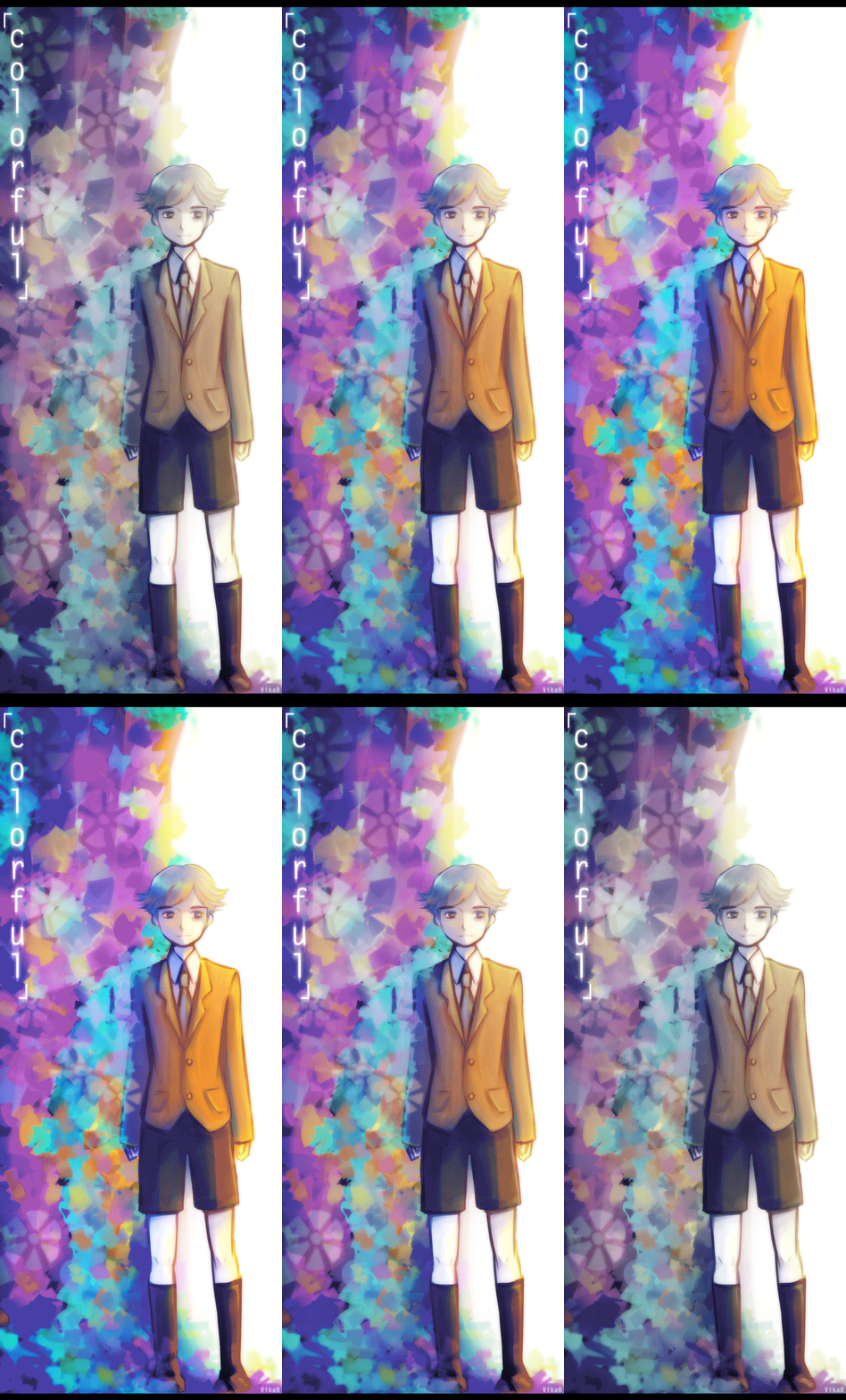
Another fan art of Purapura. http://fc09.deviantart.net/fs71/f/2013/189/0/0/purapura_by_vikab-d6cmm1e.gif


http://myanimelist.net/anime/8142/Colorful_(Movie)

http://www.animenewsnetwork.com/encyclopedia/anime.php?id=11211

http://anidb.net/perl-bin/animedb.pl?show=anime&aid=7409

Monday, 16 June 2014

The Symbiotic Student - Golden Boy

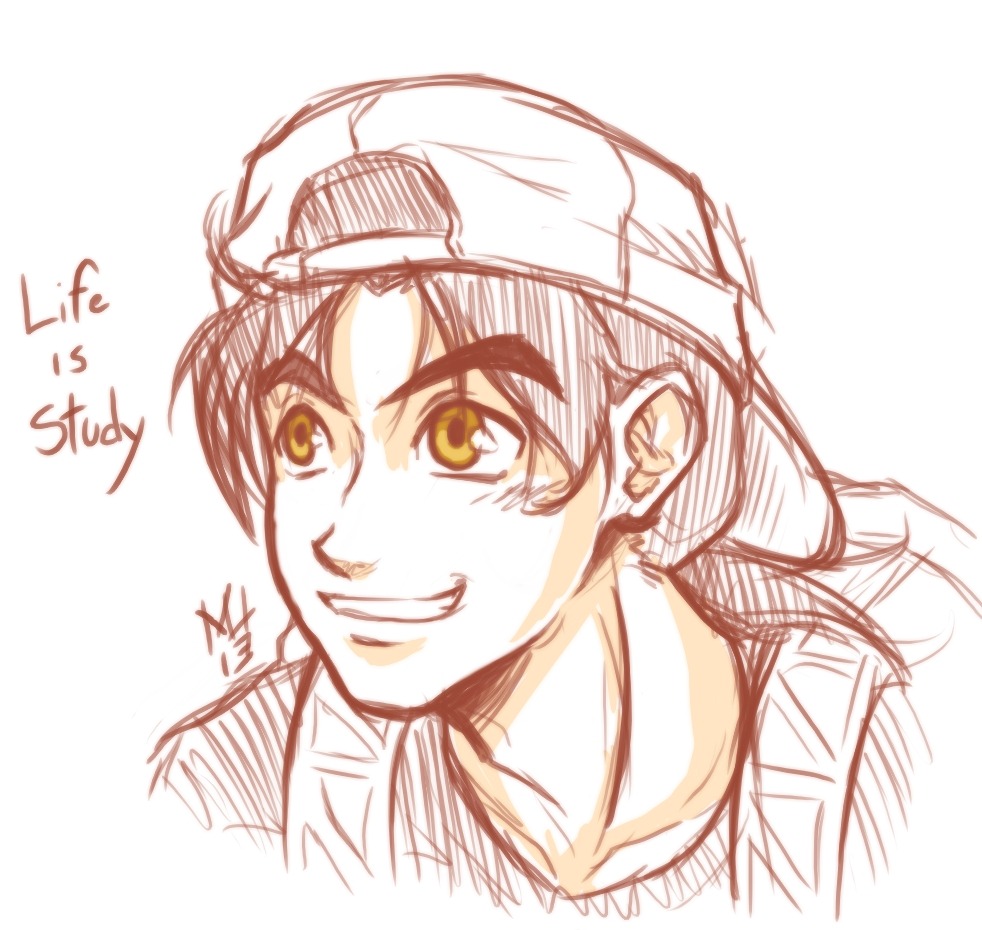
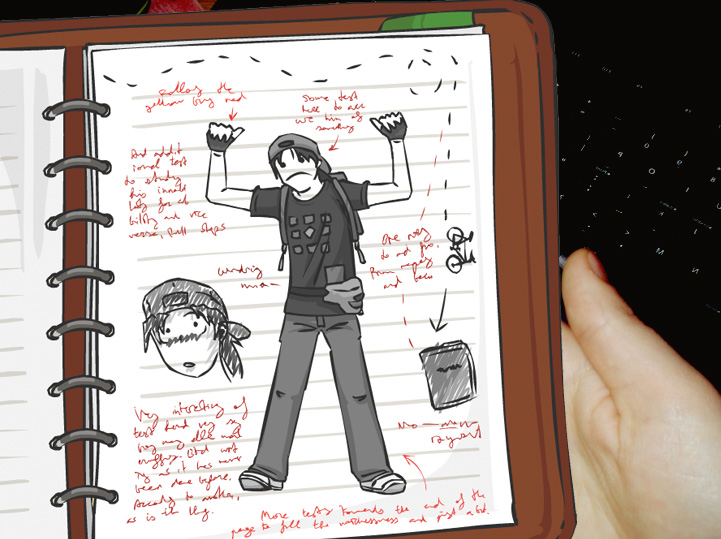
Golden Boy is a mature anime indeed. Although it is not hentai it does not mind showing the audience breasts and mastrubation. In this way it was definitely made more for guys than for girls. It is about a 25yo guy named Kintaro Oe, who withdrew from college having learnt everything already, in order to persue a journey of life study by travelling on his bike and taking on new and difeerent part time jobs. Anyway this anime way certainly an enjoyable way to spend 3 hours of an afternoon. The animation is pretty good (but obviously shows its age, being from the mid-nineties) and the music is pretty good. But what is really fun to watch is the characters and their interactions. Kintaro (the protagonist) is definitely one of the best lead roles to be written. Overall what grabbed me about the OVA was the humour. It was very funny. There is a particular scene in episode 3 where Kintaro is trying to break up a love scene at a racetrack that was hilarious. However, some humour, particularly that which is about perverted love ( for example Kintaro's obsession with toilets and what females do on them), is strange for me. But maybe this is just a western thing. I never found Master Roshi all that funny either. That being said this anime is still very funny and the change in animation plays into this, even turning into real photos at one moment in episode 6.  

Probably one of the funniest moments in the anime!!

However, despite being an anime driven by humour this short OVA series did seem to have some nice observations of life and reality (even if it was quite unrealistic at times). The first of these observations is that we shoud always be looking to learn from others. Kintaro is an eternal student it seems, whose mantra whilst doing anything is "study, study, study". Every episode we are reminded the reason Kintaro is taking on these jobs is to learn life skills. Everytime Kintaro is scolded, he is not offended and does not go on the attack, he sees it as something to learn from, for him it is "educational". He is constantly writing what he has learnt down in his very important notebook. The workplace he seemingly like the best is the ramen restaurant, not due to some large wage, but due to the fact the boss is so encouraging in teaching him. In fact money often plays a secondary role for Kintaro who offers to work for free in places, for example at the swimming pool and the software company. He realises life lessons are more important than the money he could earn. Each episode is called Lesson 1, Lesson 2, etc and the closing theme is even about study, being called "Study A Go Go". We too should always be open to learning from others, like Kintaro. 


And it is not just Kintaro who learns from others but they (usually the women he is trying to seduce) too learn from him, at which time Kintaro leaves the town. This then turns into them wanting him after seeing his true nature behind the perverted, clumsy and naive exterior. This anime also observes how we should not judge others by their first impressions. This is mainly shown with Kintaro, who is able to save the day or able to overcome obstacles despite the first impressions he gives. In fact in the first episode, he is misjudged in numerous ways by the software company president: first he is a perverted dolt who wastes his money; then he is a scammer who made a copy of the software and unplugged the server for laughs; and then she finally realises he is a kind, hardworking and intelligent guy. At the same time we learn not to judge Kintaro by his appearance we also see others are not to be judged as they appear. This is done with Mr. Kogure, who isn't the kind-heartened man he appears, but really a thug and a con-artist, and Reiko, who appears to be a very dignified and sophisicated lady but is really so sophisicated she cannot be pleased by men only by her motorcycle. Kintaro realises he should not judge by appearances, as he is able to out play Naoko, the seemingly innocent daughter of the mayor, at her own game. 

The animation of Kintaro's face create both humour and the mood of the anime.

Lastly, this anime shows us that every profession has its place and is important. This is primarily shown in the last episode where he calls all the friends he has made throughout the first five episodes to help him save the day in the last Lesson. He sees the value in every job, even the lowly ramen makers have their purpose. Humanity and the economy it seems is based on a symbiotic relationship. I think it is important that Kintaro refused to graduate from Law school (what many would recognise as the most prestigous faculty of any university) in exchange for a life of learning from others, whether it be as a worker handmaking ramen or a servant in a rich estate. Every job has its importance it seems. It is also shown where his what he learnt at the circus pays off when working for the mayor and what he learnt working at a different restaurant pays off when he needs to make the animators a healthy dish in the last episode. And again we see the importance of keeping an open mind and learning all we can in life. No knowledge and no profession is unimportant.

I don't really get this "toilet" humour.

Golden Boy was a really fun anime to watch. Its humour was very nice to watch, even if all of it wasn't to my taste. This was definitely what made the OVA series enjoyable, even if it wasn't all to my tastes. At the same time the real life observations made by this anime were quite nice to see. Even if his ability to learn things is far too unrealistic, idea we should always be looking to further educate ourselves is a valid idea. As if not judging others by first impressions and how every jb has its importance and value. 


http://myanimelist.net/anime/268/Golden_Boy

http://anidb.net/perl-bin/animedb.pl?show=anime&aid=355

https://www.animenewsnetwork.com/encyclopedia/anime.php?id=373